


Deforestation accelerates global warming by affecting the carbon cycle and altering ecosystems
When trees are cut down and forested areas cleared, the carbon dioxide stored in those trees is released into the atmosphere. This contributes to the greenhouse gas effect.
Forests act as vital carbon sinks, absorbing carbon dioxide during photosynthesis and storing it in biomass. The destruction of these carbon sinks not only releases stored carbon but also reduces the overall capacity of forests to absorb existing carbon dioxide.
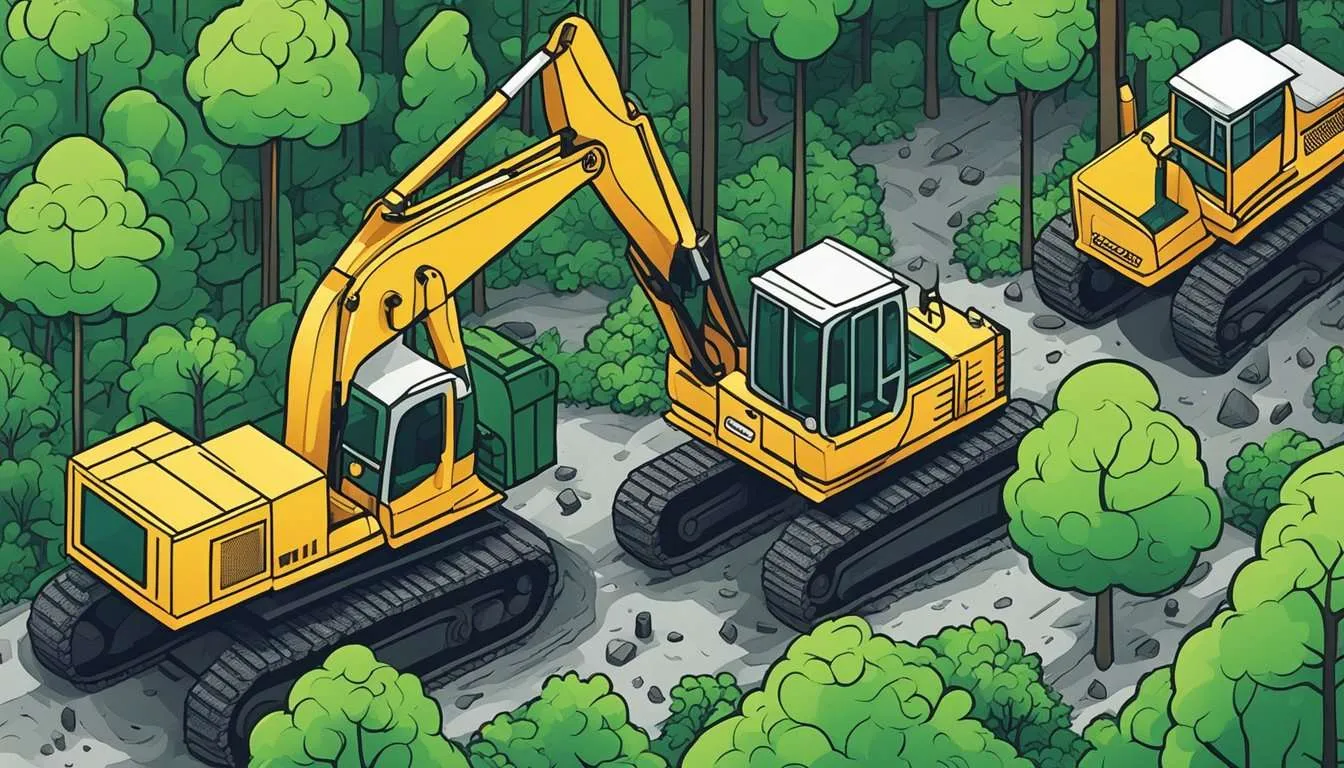
Moreover, deforestation leads to a change in land use. This often results in less vegetation cover, which disrupts local climates.
The loss of trees can bring about significant changes in weather patterns. These changes lead to effects such as increased land surface temperatures and soil erosion, further contributing to climate change.
The resulting impact of these changes is felt on both biodiversity, with the loss of unique habitats and species, and on human life, affecting societies and economies due to altered agricultural conditions and the loss of resources.
Causes of deforestation
Deforestation is like a multi-threaded rope, with each thread representing a different human activity that pulls at the fabric of the world’s forests. From the spread of farmland to the growth of cities, these factors interlace to shape land use changes on a global scale.
Agricultural expansion
Agriculture is the leading cause of deforestation, carving out vast patches of forest to make way for crops and livestock. The pressure to feed a growing population drives the clearing of trees.
- Slash-and-burn techniques clear land quickly but at a great environmental cost.
- Soy production and cattle ranching, especially in regions like the Amazon, are prime examples of agriculture-fuelled forest clearing.
Logging practices
Commercial logging, which often targets specific types of trees for timber or paper products, is a significant source of degradation. Key aspects include:
- Illegal logging: A shadowy driver of forest loss, flouting laws that aim to protect vulnerable areas.
- Selective logging: Though less extensive than clear-cutting, it can still lead to a mosaic of destruction.
Mining activities
Hungry for minerals and ores, mining operations eat into pristine forests, leaving behind a scarred landscape. Key considerations are:
- The quest for resources such as coal, gold, and diamonds often leads to extensive ecological disruption.
- Mining not only clears woodlands but can also pollute surrounding areas, affecting land use far beyond the mine itself.
Urbanisation and Infrastructure
Urban expansion and the need for infrastructure such as roads and dams bring concrete and steel into areas once dominated by trees. Important to note are:
- As cities grow, forests shrink, making way for homes, businesses, and public amenities.
- Infrastructure projects fragment habitats and alter landscapes.
Impacts on the carbon cycle

Clearing forests profoundly impacts the carbon cycle, the Earth’s natural thermostat. It is akin to a complex conveyor belt of carbon dioxide (CO2) absorption and release, where forests play a vital role in maintaining the balance.
Reduction of carbon sinks
Forests are the planet’s lungs, inhaling CO2 and, through photosynthesis, converting it into organic matter while exhaling oxygen.
They are considered one of the largest carbon sinks, absorbing significant amounts of carbon dioxide from the atmosphere. When trees are cut down, the ability of the land to absorb carbon plummets.
Emission of greenhouse gases
Deforestation results in the release of stored carbon. When trees are felled and left to decompose, or are burned, the carbon they’ve stored is released back into the atmosphere as CO2 emissions.
This contributes to the concentration of greenhouse gases, which trap heat in the Earth’s atmosphere and lead to global warming:
Effects of deforestation on the climate
Deforestation acts as a catalyst in climate change, primarily through the alteration of global temperature and precipitation, along with escalating the frequency of extreme weather events.
Alteration of global temperature
Alongside the aforementioned increase in greenhouse gas emissions, the removal of forests leads to a change in the Earth’s surface reflectivity, known as the albedo effect.
Forested areas, which typically absorb more sunlight, are replaced by surfaces that reflect more sunlight, thus affecting the global temperature.
Changes in precipitation patterns
Trees play a crucial role in the water cycle, releasing water vapour into the atmosphere. Deforestation disrupts this cycle, leading to changes in rainfall distribution and potentially reduced rainfall in some areas.
Areas experiencing significant tree loss can undergo diminished evapotranspiration, which can lead to drier climates and altered precipitation patterns.
Increased incidence of extreme weather events
Forests help to stabilise the climate by regulating environmental moisture levels and providing a buffer against extreme weather.
Without the protective canopy of forests, landscapes can become more susceptible to events like heatwaves, storms, and floods.
Biodiversity loss
Deforestation accelerates the effects of climate change by removing vital carbon sinks provided by forests. It poses a dire threat to global biodiversity.
Threats to species and habitats
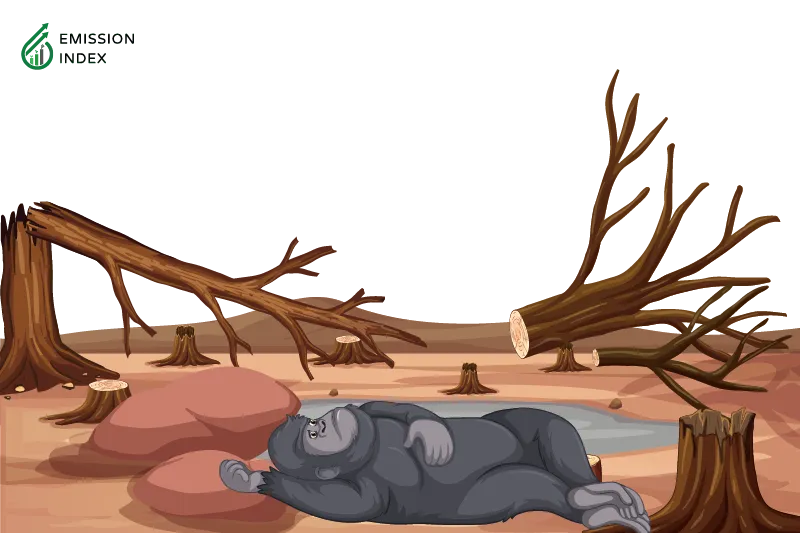
- Habitat fragmentation: Once vast and contiguous, forests become islands separated by cleared land. This fragmentation affects animals and plants, isolating populations and increasing their vulnerability to extinction.
- Endemic species impact: Tropical regions, rich in biodiversity, often contain species exclusively adapted to local conditions. When their habitats diminish, so too does the chance for these species to survive.
Disruption of ecosystem services
- Forests facilitate pollination and seed distribution, critical services for maintaining plant diversity. Destroying forests disrupts these processes and reduces biodiversity at both local and global scales.
- Disruption of the water cycle leads to poorer ecosystem health and loss of species that depend on stable water conditions.
Societal and economic consequences
Deforestation brings about social upheaval and economic instability. Communities face displacement and loss of heritage, while agriculture contends with erratic climate patterns, impinging on food security.
Impact on indigenous communities
Indigenous populations are custodians of the forest, with traditions entwined in the flora and fauna around them. Deforestation severs their connection to the land, leading to:
- Cultural erosion: Ancestral knowledge, language and traditions fade as forests dwindle.
- Displacement: Forced to relocate, communities lose both their homes and social structures.
Implications for agriculture and food security
The agricultural sector heavily depends on a stable climate disrupted by deforestation. This leads to:
- Altered rainfall patterns: Shifts in precipitation affect crop yields and food production.
- Soil degradation: The loss of trees leads to erosion and diminished soil fertility, which impacts sustainable development in agriculture.
Global and regional effects

Importance of tropical forests
Tropical deforestation stands as a major climate change driver. These regions, with the Amazon rainforest and Congo Basin, are key.
These forests’ dense, moisture-rich canopy holds a massive amount of the world’s carbon stock.
Deforestation in key regions
The Brazilian Amazon and Africa’s forests, particularly around the Congo Basin, face critical deforestation. Brazil leads the tally; its tree cover diminishes each year. The Congo is pressured by similar forces.
Tropical deforestation patterns in South America and Africa mirror a growing concern. The loss of biodiversity and heightened carbon emissions from these tropical zones bear global implications.
Conservation and recovery efforts
Conservation and recovery stand as twin pillars upholding the future of our forests.
It’s akin to a team with both defenders and forwards; one protects what exists, while the other rebuilds what was lost.
Reforestation and afforestation
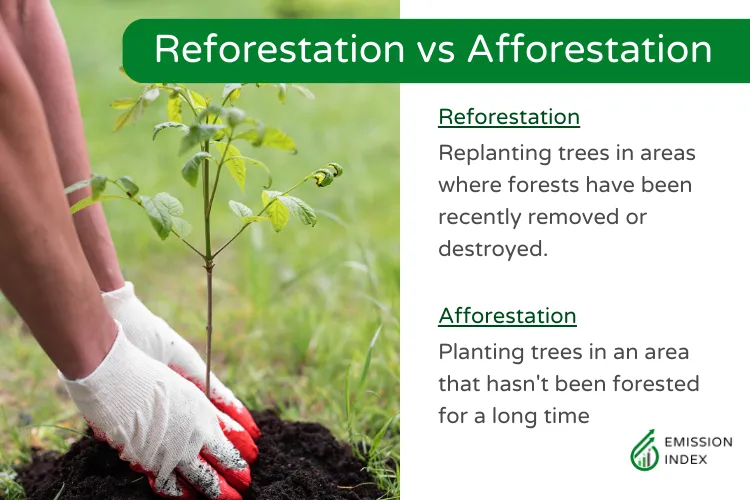
Reforestation and afforestation are crucial strategies for mitigating climate change, supported by initiatives like REDD+ (Reducing Emissions from Deforestation and Forest Degradation).
- Reforestation involves tree planting in areas where forests have been cut down.
- Afforestation introduces forests to barren lands that previously lacked tree cover.
Both actions aim to increase carbon sequestration, restore biodiversity, and enhance ecosystems.
Protection of existing forests
Preserving forests is crucial in the fight against climate change. Protective measures include creating designated areas that prohibit logging and encroachment, as well as enforcing policies that align with the Paris Agreement to ensure the protection of forested land.
This conservation effort serves as a shield, maintaining the crucial role of existing forests in carbon storage and habitat provision.
Sustainable forest management
Sustainable forest management (SFM) unites ecological health with economic viability and social equity.
Critical components of SFM include:
- Implementing practices that maintain forest contributions to climate regulation.
- Ensuring resources are used responsibly to prevent over-exploitation.
Essentially, it’s about treating forests as renewable rather than expendable resources, guaranteeing their permanence for future generations.
Mitigation strategies and policies
Mitigation of deforestation is pivotal, akin to sowing seeds for a greener future.
It involves curbing the excesses of logging and planting robust policies as pillars to support the climate change battle.
International agreements
Countries worldwide have agreed to important goals in the Paris Agreement, pledging to decrease greenhouse gas emissions and improve carbon sequestration efforts.
National policies and enforcement
Governments enforce laws to protect the environment by implementing policies that limit timber harvests and establishing systems like the Amazon Fund, which pools funding to support carbon-rich forests.
Community-based initiatives
Communities have the power to shape their own green destiny through local conservation projects and education campaigns.
Monitoring and measuring deforestation

Effective monitoring and measuring of forest loss is fundamental in understanding how land-use changes contribute to global warming.
They provide the metrics to gauge the effects of deforestation on carbon dioxide emissions and the health of our planet.
Technological advancements in monitoring
Satellite imagery enables systematic monitoring of deforestation globally.
- High-resolution data captures the extent and speed of deforestation.
- Remote sensing technology improves the detection of subtle changes in forest cover.
- Drones provide additional layers to ground-based measurements.
Data accuracy and access
Measuring tools must provide precise data to be effective.
- Inaccuracies can significantly skew deforestation rates.
- Open access to meteorological observations supports shared understanding.
- Transparent data is crucial for international cooperation on land management.
Summing up: What is the impact of deforestation on climate change?
Deforestation contributes to global warming because trees absorb carbon dioxide from the atmosphere, acting as a natural carbon sink. When trees are cut down or burned, the stored carbon is released back into the atmosphere, increasing the greenhouse effect and contributing to climate change.
To combat deforestation, you can support conservation efforts, choose sustainable products made from responsibly sourced materials, and participate in reforestation projects.
Additionally, advocating for policies that protect forests and promote sustainable land management practices can help address the issue on a larger scale. It is important for everyone to take action to preserve and restore the world’s forests in order to mitigate the impacts of deforestation on global warming.