


When businesses discuss cutting their carbon footprint (often referred to as their corporate carbon footprint), they categorise greenhouse gas (GHG) emissions into Scope 1, 2, and 3. These categories of emissions help companies pinpoint where their emission hotspots lie, as defined by the Greenhouse Gas Protocol.
But what — you may be wondering — does this mean?
Well, we’ll be going over:
- What are the differences between Scope 1, 2, and 3 emissions?
- How do Scope 3 emissions present the biggest challenge?
- What strategies can companies use to reduce emissions across all scopes?
Let’s learn how companies can take action to reduce emissions!
What are Scope 1, 2, and 3 emissions?
Simply put: these are different ways companies categorise their GHG emissions in line with greenhouse gas accounting standards.
The Greenhouse Gas Protocol (launched in 1998) introduced these scopes of emissions to prevent double counting and clarify which activities belong to which organisation.
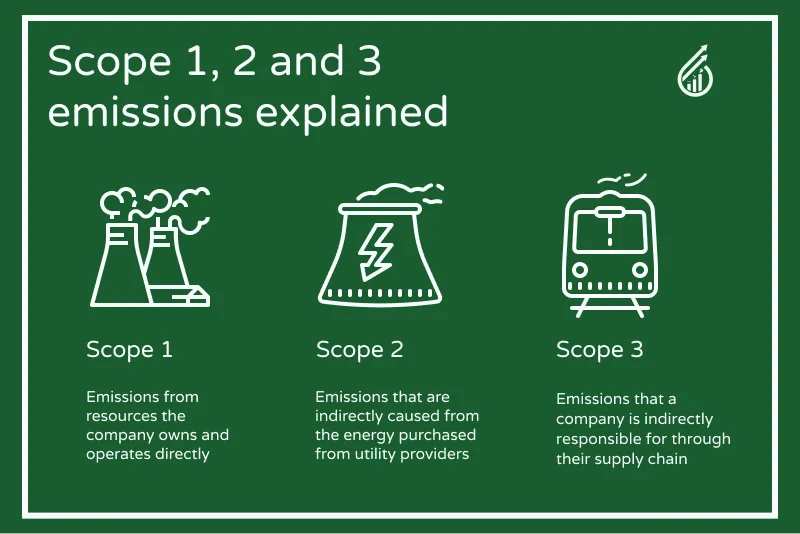
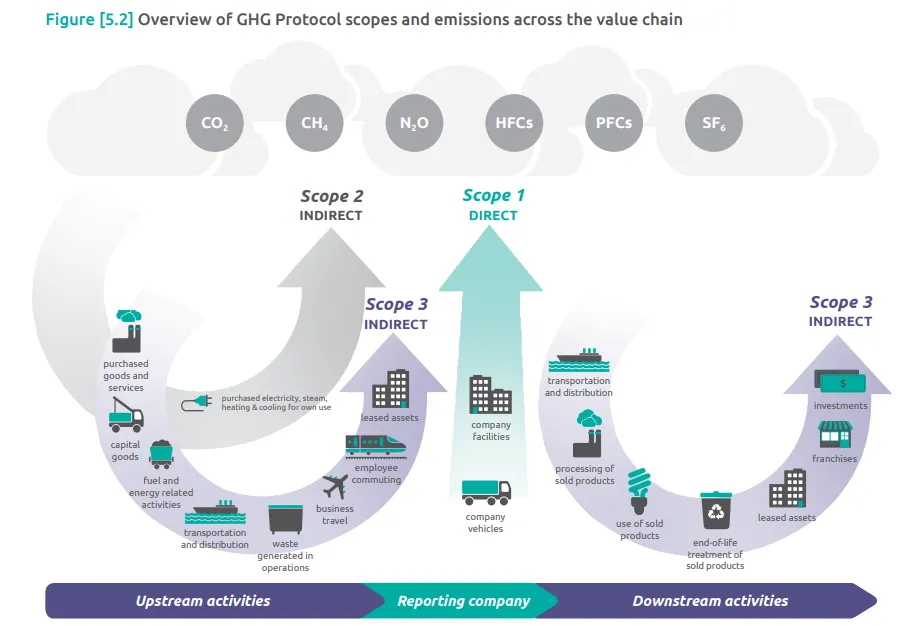
- Scope 1: Emissions from combustion and other direct GHG sources the company owns and operates (e.g. emissions from fleet vehicles, running industrial processes, and heating buildings).
- Scope 2: Indirect greenhouse gas emissions from purchased energy (e.g. electricity consumption from utility companies).
- Scope 3: Indirect emission sources across the entire supply chain, including business travel, disposal of waste generated, upstream fuels and raw materials, and downstream transportation of products.
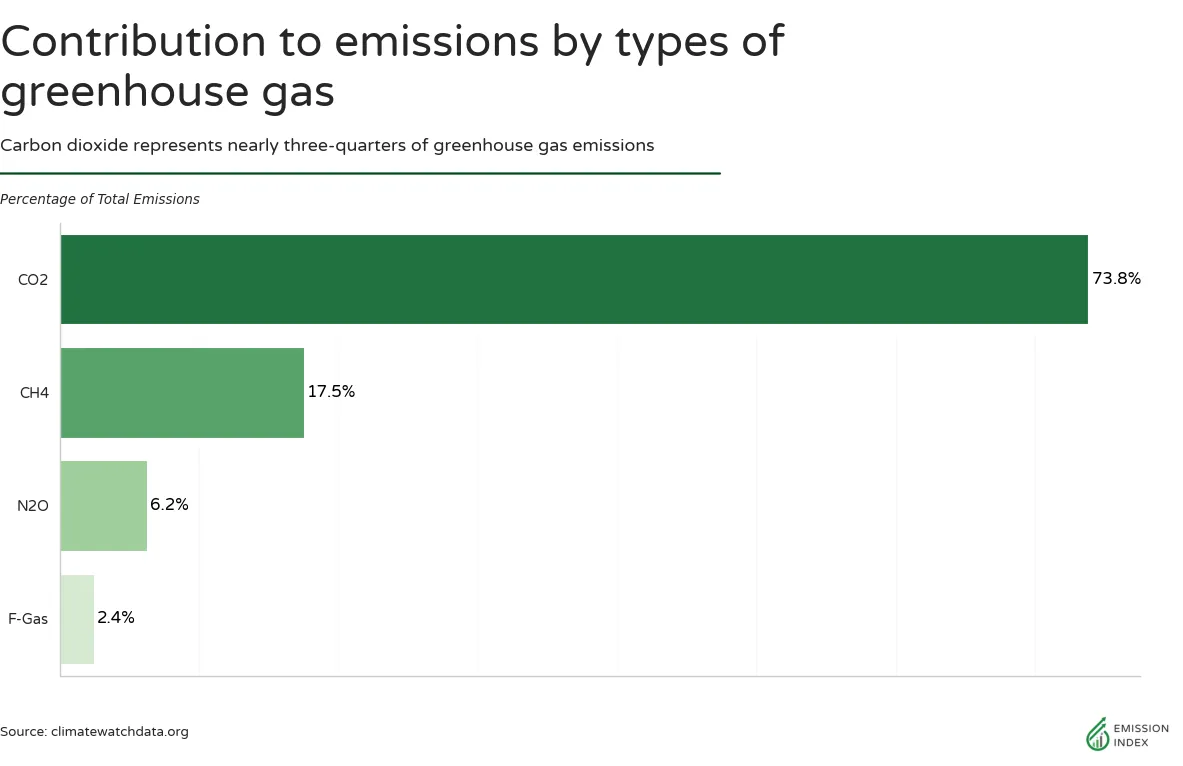
It’s essential to measure and report on these because 73.8% of greenhouse gas emissions come from carbon emissions, but other gases like nitrous oxide also have significant warming potential.
By identifying these chain emissions, companies can see where reduction of emissions would have the largest source of positive impact on climate change.
By knowing where your Scope 1, 2, and 3 emissions come from, you can create what the Greenhouse Gas Protocol calls an “emissions inventory”. You can then begin the calculation of carbon footprints and start to take action to reduce them.
Scope 1
Scope 1 emissions are under the company’s immediate control. These emissions from sources such as fuel combustion in machinery or fleet vehicles are easier to measure because they are on-site or directly operated.
Common examples include:
- Running machinery
- Driving company vehicles
- Operating computers and servers
- Heating buildings
- Process emissions (e.g. transforming raw materials)
- Fugitive emissions (e.g. leaks of gases or vapours)
Because these are direct GHG emissions, they’re typically easier to measure and manage. Many companies focus on upgrading equipment, improving energy efficiency, and cutting factory fumes to reduce Scope 1.
Scope 2
Scope 2 emissions are indirect GHG emissions caused by the production of purchased energy. Although the company doesn’t generate these emissions on-site, it is still responsible for them through its business activities.
Common examples include:
- Electricity used to power an office or industrial facility
- Steam generation purchased from external providers
- Heating or cooling services supplied by utility companies
Organisations use various approaches to reduce Scope 2 numbers, such as switching to renewable energy generation, improving the infrastructure for electricity grids, or optimising electricity generation.
Scope 3
Scope 3 covers indirect emission sources that occur outside the company’s direct control, both upstream (e.g., procurement of materials) and downstream (e.g., customer use and waste disposal).
These are often the most significant part of a company’s GHG emissions inventory and can include:
- Emissions from business travel
- Life treatment (e.g. recycling or end-of-life handling of products)
- Production and transportation of purchased goods (upstream emissions)
- Distribution to customers (downstream transportation)
- Product carbon footprints (including usage and end-of-life)
- Capital goods, franchises, leased assets, and investments
Scope 3 often represents the largest source of emissions and can be tricky to quantify.
Building strong supplier relationships and performing life cycle or cradle-to-gate analyses can help identify reduction of emissions opportunities. Collaboration and shared data tracking across the entire sustainability journey are crucial.
Impact of Scope 1, 2, and 3 emissions
If left unmanaged, all three scopes worsen the impact of climate change. For instance, the overproduction of nitrous oxide from human activities (like using petrol-fuelled cars) contributes to smog and acid rain, while carbon dioxide released from fuel combustion and industrial processes is a major driver of global warming.
Other pollutants include methane, chlorofluorocarbons (CFCs), and particulate matter like black carbon, further intensifying warming and reducing air quality. This environmental impact damages crops, affects health, and increases the likelihood of extreme weather events.
Successful reduction of corporate emissions
Case study A: Schneider Electric
Schneider Electric launched the Zero Carbon Project in April 2021, aiming to reduce operational carbon emissions throughout their supply chain and their Scope 1 and 2 emissions by 2025.
They focus on collaborating with suppliers, helping them identify emission hotspots and adopt more energy-efficient methods.
So far, over 1,000 suppliers have signed up, with more than 1,300 attending technical training. As of 2021, Schneider Electric reported about a 1% reduction in greenhouse gases across its supplier network – an early but important step in its broader corporate climate action strategy.
Case study B: Volvo
Volvo pledged to become net-zero by 2040, with a 50% greenhouse gas reduction in Scope 1 and 2 by 2030. They also set targets to cut Scope 3 emissions in trucks, buses, and construction equipment.
Strategies include switching from fossil fuels to renewable electricity and focusing on downstream activities (like reducing vehicle emissions when customers use their products). By 2021, their Scope 3 emissions from sold products had dropped by 11%, illustrating a higher level of climate action among major automotive manufacturers.
Case Study C: IKEA
IKEA aims to become climate-positive by 2030, striving to reduce more greenhouse gas emissions than it produces throughout its value chain. To achieve this, it invests in renewable energy projects and sets rigorous requirements for store energy efficiency and logistics operations. This approach helps slash both direct and purchased-energy emissions (Scope 1 and 2).
In tackling Scope 3 emissions, IKEA prioritises sustainable material sourcing, product circularity, and extended product life cycles. For example, by designing items for easy disassembly and recycling, IKEA fosters a culture of reuse and reduces the demand for raw materials. It also collaborates closely with suppliers to meet strict sustainability standards, ensuring environmental considerations are embedded from product design to end-of-life disposal.
IKEA’s success lies in its holistic approach, which combines regular emissions assessments, transparent supply chain collaboration, and customer engagement on sustainability issues. By championing circular design and encouraging more responsible consumption habits, IKEA exemplifies how global brands can embrace both growth and climate action.
For more information, visit IKEA’s Official Sustainability Page.
Reducing your carbon footprint
Strategies for reducing Scope 1 and 2 emissions
Since Scope 1 and 2 are within a company’s direct or purchased control, organisations can minimise emissions from combustion processes or switch to electric vehicles to cut direct GHG emissions.
Installing on-site energy generation facilities (e.g. solar panels or wind turbines) and negotiating with electricity utilities for lower-carbon energy also help in the reduction of emissions.
Strategies for reducing Scope 3 emissions
Scope 3 often requires industry collaboration and transparent communication. One way is to work closely with suppliers (just as Schneider Electric does), educating them about indirect greenhouse emissions and supporting them in adopting cleaner, more efficient operations.
This might involve rethinking upstream transportation, improving waste disposal practices, and designing products with lower life cycle impacts.
Summing up
- Scope 1 emissions are direct emissions that a company owns or controls (e.g. emissions from fleet vehicles).
- Scope 2 emissions are indirect greenhouse gas emissions from purchased energy (e.g. electricity consumption).
- Scope 3 emissions cover all other indirect emission sources in the supply chain, from upstream to downstream emissions from transportation and waste disposal.
- All three scopes worsen the impact of climate change if left unmanaged.
- Reductions in Scope 1 and 2 can be achieved quickly through energy efficiency improvements and shifts to renewable electricity.
- Scope 3 calls for systemic collaboration, better data, and proactive partnerships with experienced climate action experts.
By understanding, quantifying, and reporting on all types of emissions (and taking a holistic approach across the supply chain), you’ll be in a strong position to cut your GHG emissions and enhance your sustainability performance. This comprehensive view forms the backbone of an effective climate action strategy and sets the stage for real climate progress.
Additional note: Over any period of time in a company’s development, aligning with corporate standards and taking consistent steps towards the reduction of emissions ensures a higher level of climate action engagement, helping engage employees and improve brand perception.

You’ve explained it perfectly.