


The Corporate Social Responsibility (CSR) Pyramid, developed by Archie Carroll, outlines the different levels of responsibility that businesses can integrate into their operations, beyond the traditional focus on profit maximisation.
These levels of responsibility include
- Economic Responsibility: This is the foundation of the pyramid. Companies must be profitable to survive, but they should balance this with ethical considerations. Profitability supports long-term sustainability.
- Legal Responsibility: Businesses are expected to comply with laws and regulations. Legal responsibility ensures companies follow the rules while pursuing economic goals.
- Ethical Responsibility: Beyond legal obligations, companies should act ethically and fairly. This includes considering broader societal expectations, such as fair labour practices and environmental protection.
- Philanthropic Responsibility: At the top of the pyramid, companies engage in voluntary activities to give back to the community, like charitable donations or community programs.
The pyramid gives companies a systematic way to positively impact and fulfil their social responsibilities alongside their business operations.
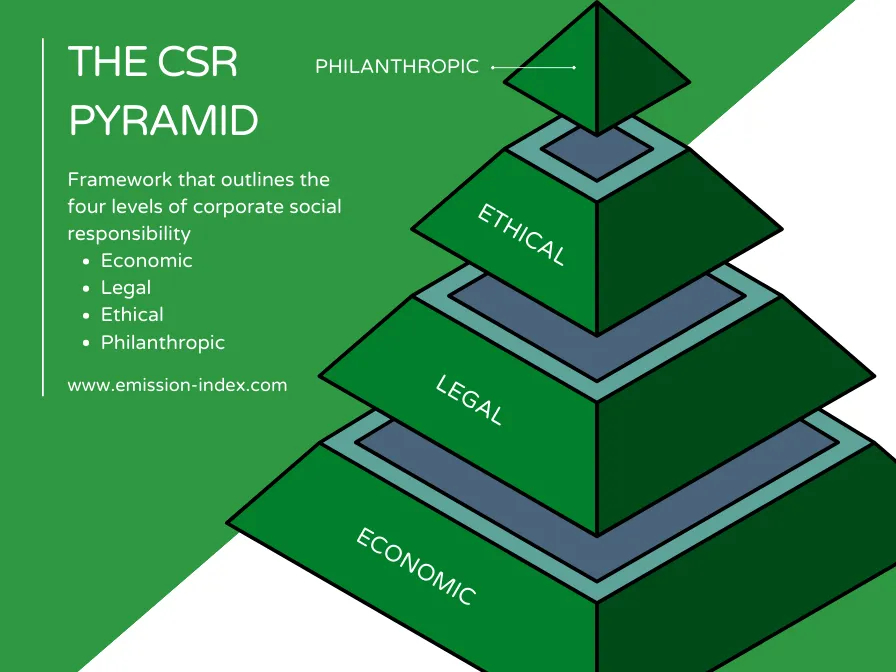
It extends beyond the traditional profit-focused view espoused by economists like Milton Friedman.
You can find an excellent summary of the topic in the below video by Tutor2U.
Historical perspective – the changing role of business and society
Corporate Social Responsibility (CSR) emerged in the 1950s as the business community began acknowledging its role in the broader social system beyond mere profit-making.
Since then, concepts such as corporate social performance and corporate sustainability have further evolved the practice of CSR, underpinning the shift towards purpose-driven business models. Over time, a few key milestones have shaped the narrative:
- The 1950s: Awareness of businesses’ social responsibilities began to emerge.
- The 1970s: Discussion on businesses’ social contract with society intensified.
- The 1990s: Concepts like corporate citizenship and sustainability gained traction.
- The 21st century: CSR becomes integral to sustainable business practices and is increasingly tied with overall corporate strategy.
This historical voyage has seen CSR mature from an ancillary task to a central component, illustrating how a responsible business extends far beyond traditional boundaries.
Carroll’s pyramid of corporate social responsibility
The CSR pyramid depicts the different responsibilities businesses should embrace. It outlines how business organisations can balance differing pressures pragmatically and effectively.
The pyramid layers these responsibilities from fundamental to discretionary, establishing a guideline for corporate behaviour.
Economic responsibility
Economic responsibility is the foundation of CSR and involves a company’s obligation to be profitable while ensuring long-term sustainability.
- Economic performance: The base of Carrol’s CSR pyramid ensures a company’s survival and profitability.
- Stakeholder expectation: Shareholders, employees, and customers expect financial stability and growth.
- Sustainable business practices are linked to long-term growth and wealth creation for shareholders.
- Balancing act: It is critical to walk a fine line between profitability and ethical expectations.
Legal responsibility
The CSR Pyramid’s second stage emphasises how important legal responsibility is in forming moral corporate practices.
Adherence to laws and regulations is critical:
- As a foundational obligation, businesses must comply with local, federal, and international laws.
- Legal compliance upholds a company’s legitimacy and aligns it with society’s standards
- Risk mitigation is crucial for legal compliance. Complying with the law helps companies avoid legal trouble, lawsuits, penalties, and reputational damage.
- Upholding the law’s boundaries is a major factor in establishing and preserving public trust.

Ethical responsibility
Beyond legality, business ethics is a critical factor.
- Ethical practices go further than legal requirements, focusing on what is right, fair, and just.
- Businesses that practise ethical behaviour must consider the bigger picture of their decisions, not just the legal but also the moral consequences.
- Fair business practices are essential for ethical responsibility. This means treating all stakeholders fairly. Establishing a culture of fairness, transparency, and trust is crucial.
- Social accountability is the responsibility of businesses to consider their environmental impact and commitment to local communities. They should exceed legal requirements to enhance societal well-being and ethical behaviour.
Philanthropic responsibility
Philanthropic activities, or the voluntary acts that companies undertake to benefit society outside of their legal and ethical requirements, are at the top of the CSR pyramid.
- This examines the business’s role as a good corporate citizen, accentuating voluntary or philanthropic actions.
- Voluntary acts like charity work, donations and community service are crucial for building trust and promoting social goodwill.
- The concept of philanthropic responsibility emphasizes a company’s voluntary contributions to the welfare of society, which go beyond legal and moral obligations.
- Businesses that participate in the community and conduct charity endeavours are likely to be seen positively by the general public, which fosters customer satisfaction and brand loyalty.
Image From: https://theCSRjournal.in/wp-content/uploads/2019/11/Carrols-Pyramid-of-CSR-1.jpg
Impact on internal and external stakeholders
An organisation’s diverse stakeholders include shareholders, employees, consumers, and the broader community.
- Shareholders: financial investors expecting returns
- Employees: the workforce seeking fair treatment and job security
- Consumers: purchasers of goods and services desiring value and ethics
- Community: local and global society affected by organisational operations
Effective stakeholder management considers all parties impacted by the company’s decisions.
For instance, when a company overlooks the adverse impact of their policy on women, it fails to recognise these key stakeholders.

Benefits of CSR
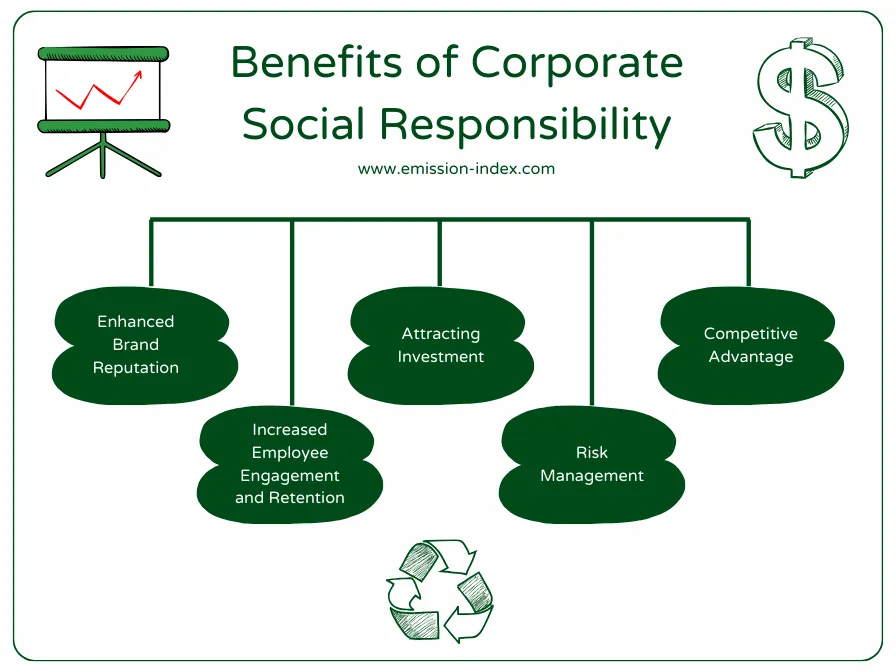
- Enhanced brand reputation: Engaging in CSR activities can improve a company’s image and brand perception, attracting positive attention from consumers, investors, and the media. This positive image can lead to increased customer loyalty and brand value.
- Increased employee engagement and retention: Companies prioritising social and environmental responsibility often see higher employee satisfaction, morale, and loyalty levels. This can lead to improved productivity and reduced turnover rates, as employees are more likely to feel proud and motivated to work for a socially responsible company.
- Attracting investment: Investors increasingly consider CSR factors when making investment decisions. Companies that demonstrate a commitment to ethical practices and sustainability are more likely to attract investment from socially conscious investors.
- Risk management: Implementing CSR practices can help companies identify and manage risks, particularly those related to environmental, social, and governance (ESG) issues. This proactive approach can prevent potential issues that might harm the company’s reputation or financial performance.
- Competitive advantage: CSR can differentiate a company from its competitors, offering a competitive edge in the marketplace. Companies seen as responsible and sustainable can appeal more to consumers and clients who value these qualities, potentially leading to increased sales and market share.
Integration of CSR into business strategy
Companies can incorporate CSR into business operations by
- Linking CSR objectives with the overarching business plan
- Showing leadership support for CSR
- Involving stakeholders, and integrating CSR into decision-making procedures
- Including CSR considerations in staff development and supply chain operations.
- Regularly tracking and reporting CSR metrics to ensure accountability and transparency.
Alignment on a strategic level
Sync up CSR objectives with the overarching company plan. Ensure the company’s mission, vision, and long-term goals incorporate social and environmental goals and ethical responsibilities.
At every decision-making level, incorporate CSR concerns to guarantee a constant alignment with strategic objectives.
Dedication of leadership
Show dedication on the part of the senior leadership. A CEO’s support of CSR efforts sets the tone for the company.
Incorporate CSR measures into executive performance reviews to emphasise the significance of ethical business conduct.
Engaging stakeholders
Perform in-depth stakeholder analyses to determine the main issues and expectations. Talk to stakeholders, including staff members, clients, vendors, and neighbourhood groups, to learn about their viewpoints on the responsibility of business in society.
Provide channels for continuing communication with interested parties, asking for their opinions and incorporating them into CSR plans.
Employee engagement
Encourage your staff to adopt a culture of social responsibility. Promote involvement in corporate social responsibility programmes and offer skill-based volunteer work opportunities.
Include CSR concepts in staff development courses, stressing the organisation’s dedication to business integrity.
Integration of the supply chain
Include CSR procedures throughout the whole supplier chain. Work with suppliers to guarantee sustainable operations, fair labour practices, and ethical sourcing.
Incorporate supplier evaluation methods to measure and enhance CSR performance across the supply chain.
Reporting & metrics
Make KPIs (key performance indicators), especially for CSR objectives. To gauge the effectiveness of CSR programmes, track and report on these KPIs regularly.
Establishing a transparent reporting process to communicate achievements, difficulties, and advancements to relevant parties is essential and ensures accountability.
Challenges and opportunities
Businesses must negotiate the difficulties and conflicting obligations associated with implementing CSR initiatives in a dynamic landscape.
- Laws and regulations can be a moving target, introducing complexity in maintaining compliance with legal obligations.
- Balancing short-term business goals with long-term social responsibilities presents a challenge to demonstrating return on investment.
- Embracing an integrated and sustainable stakeholder framework can open new markets and innovation opportunities, directly influencing community development and environmental stewardship.
- Resolving scepticism and criticism is crucial to maintaining trust. It is important to establish transparent and genuine CSR initiatives.
- Greenwashing claims pose significant risks that require proactive measures to address and prevent.
Case studies/examples
Unilever: comprehensive sustainability initiatives
With its Sustainable Living Plan emphasising economic, legal, ethical, and charitable duties, Unilever, a worldwide consumer goods firm, demonstrates its strong commitment to Corporate Social Responsibility (CSR).
Despite advancements, obstacles still stand in the way of accomplishing sustainability goals, such as cutting back on waste and water use.
Patagonia: ethical practices and environmental stewardship
Outdoor apparel and equipment brand Patagonia is renowned for its transparent and ethical business practices, which include fair labour and environmental consciousness.
However, The business must strike a balance between sustainable business practices and customer demand to ensure scalability without sacrificing accessibility or quality.
Microsoft: philanthropic activities and community engagement
Microsoft’s “Microsoft Philanthropies” programme, which gives underprivileged areas access to technology, is devoted to education and digital inclusion.
The corporation also promotes environmental sustainability through investments in renewable energy sources and carbon reduction.
Starbucks: ethical sourcing and community support
Starbucks is dedicated to moral business practices, procuring coffee beans grown morally and supporting fair trade.
Programmes like the Starbucks Foundation promote community support, yet environmental sustainability is an issue, especially concerning single-use packaging. Increasing CSR is essential.
These case studies show that even in areas where businesses may succeed in corporate social responsibility, there is still room for development.
Because CSR is dynamic, it necessitates constant creativity, adaptability, and dedication to tackling new issues to continue positively influencing society.
Future of CSR
Corporate Social Responsibility (CSR) is a dynamic field evolving as companies adapt to new problems and shift public expectations.
Companies can manage CSR in the future by
- Embracing the concepts of the circular economy and environmental sustainability.
- Putting a priority on business transparency via blockchain technology.
- Concentrating CSR efforts on diversity, inclusivity, and social impact.
- Using technology to foster international cooperation and creative CSR solutions.
- Modifying CSR strategy constantly and responding to changing regulatory frameworks.
Environmental sustainability
Companies should integrate circular economy ideas for waste reduction and resource efficiency as they adopt more sustainable practices.
The increasing need for eco-friendly and carbon footprint-reducing activities will spur strategic planning and innovation.
Corporate transparency
In the future, there will be a greater emphasis on openness in company operations. Transparent supply chain management will be made possible by utilising technology like blockchain.
Transparency in business operations and the open sharing of CSR initiatives are becoming essential.
Social impact and inclusivity
To address societal disparities, CSR initiatives go beyond conventional giving. A growing emphasis is being placed on promoting diversity, equity, and inclusion in the workplace due to incorporating social impact measures into corporate social responsibility reports.
Holistic CSR pyramid
It is anticipated that the pyramid of social responsibility will change over time to integrate new focus areas, such as data privacy and technological ethical considerations.
This progression will acknowledge how ethical behaviour intertwines with legal, charitable, and economic duties.
Summing up
Businesses are urged to navigate the challenging terrain of sustainable and socially responsible operations through the CSR Pyramid, which acts as a conceptual framework.
A comprehensive approach to corporate social responsibility is fostered by highlighting firms’ economic, legal, ethical, and charitable duties.
This encourages businesses to consider their place in society and highlights the beneficial contributions they may make at every stage.