


Renewable energy asset management involves optimising and maintaining assets like solar panels, wind turbines, and hydro plants for maximum efficiency and minimal downtime.
It includes technical oversight (maintenance, performance tracking) and commercial management (financial reporting, regulatory compliance). Effective asset management boosts sustainability, operational efficiency, and profitability for renewable energy projects.
Renewable energy asset management plays a crucial role in maximising the performance and lifespan of wind farms, solar arrays, and other renewable energy installations. It involves a careful blend of technical oversight, financial planning, and strategic maintenance.
But how can effective asset management truly elevate the sustainability of renewable projects Well, we’ll be going over:
- What are the key components of renewable energy asset management?
- How does technology improve the efficiency and reliability of renewable energy assets?
- What are the best practices for ensuring long-term sustainability and operational success?
Let’s dive in!
What is renewable energy asset management?
Renewable asset management is crucial for efficiently operating solar, wind, and other renewable plants.
It involves maintaining and optimising physical assets to ensure maximum energy output with minimal downtime. This practice boosts both performance and sustainability, making renewable energy more competitive and reliable.
Commercial asset management provides tax compliance, financial reporting, financing structuring, regulatory compliance, and stakeholder records maintenance, while technical asset management oversees operations and maintenance.

Understanding asset management
Asset management refers to the systematic process of developing, operating, maintaining, and selling assets cost-effectively.
In the renewable energy sector, this involves monitoring and managing assets like solar panels, wind turbines, and hydro plants.
Key Points:
- Planning: Scheduling maintenance and upgrades
- Monitoring: Tracking performance and efficiency
- Maintenance: Conducting regular inspections and repairs
- Analysis: Evaluating data to improve operations
Effective asset management requires a blend of technical skills and a strong grasp of the operating model to keep all systems running smoothly.
Types of renewable energy assets
Renewable energy assets are diverse, each requiring different management strategies.
Wind:
- Onshore and offshore wind farms
- Maintenance includes blade inspections and gearbox repair
Solar:
- Photovoltaic (PV) systems and solar thermal plants
- Regular cleaning of panels and efficiency checks
Hydro:
- Dams and small-scale hydro systems
- Monitoring water flow and turbine operation
Asset managers must understand the unique needs of each asset type to ensure top performance. This tailored approach helps in addressing specific operational challenges and leveraging the full potential of each asset.
Role of asset managers
Asset managers play a crucial role in renewable energy projects. They ensure assets are performing at their best and are aligned with corporate governance standards.
Responsibilities:
- Technical asset management: Overseeing technology performance and maintenance
- Performance monitoring: Using data analytics to track efficiency and output
- Financial oversight: Managing budgets and financial returns
- Compliance: Ensuring all operations meet regulatory standards
Effective asset managers balance technical know-how with strategic planning to drive sustainability and profitability in renewable energy projects. This role involves constant learning and adaptation to keep up with evolving technologies and market conditions.
Commercial asset management
Renewable energy projects require specialised attention due to complex financial and regulatory landscapes.
The commercial asset management team provides essential services for financial well-being.
- Maintaining tax and regulatory compliance
- Tracking regulatory changes and managing permits, licenses, and other requirements.
- Maintaining transparent communication with stakeholders and compliance with corporate governance standards.
Technical asset management
Technical asset management is the backbone of renewable energy projects, ensuring the optimal performance and longevity of assets.
Key responsibilities and tasks include
- Operation and maintenance oversight. This includes monitoring equipment performance, ensuring timely maintenance, and optimising operational efficiency.
- Identifying deviations in performance issues and implementing corrective measures.
- Managing preventive and corrective maintenance schedules to mitigate and address the risk of unexpected breakdowns.
- Managing relationships with communities to align with environmental regulations and minimise the project’s ecological footprint.
- Supervision of outsourced companies and external technical advisors.

What to consider when improving asset management
Enhancing current asset management practices involves strategic considerations across key areas for optimal performance. Here is a concise exploration of vital factors and challenges:
Key areas of focus
- Asset reliability and availability: Improving asset management begins with maximising the reliability and availability of critical components. This involves adopting preventive maintenance strategies, leveraging predictive analytics, and ensuring quick response times to minimise downtime.
- Operational cost management: Efficient asset management requires a keen eye on operational costs. Organisations can manage operational expenses effectively by optimising maintenance schedules, streamlining workflows, and embracing cost-effective technologies.
- Decision support: Informed decision-making is crucial for effective asset management. Implementing advanced decision support systems that leverage data analytics and real-time insights empowers teams to make timely and strategic decisions, contributing to overall operational excellence.
- Risk management: Robust risk management strategies are essential to mitigate potential threats to asset performance. Identifying and assessing risks, implementing preventive measures, and having contingency plans in place enhance the resilience of the asset management framework.
Methods of asset management
Monitoring: enhancing renewable asset performance
Renewable energy assets, such as wind turbines and solar panels, demand continuous oversight to ensure optimal performance and minimal downtime.
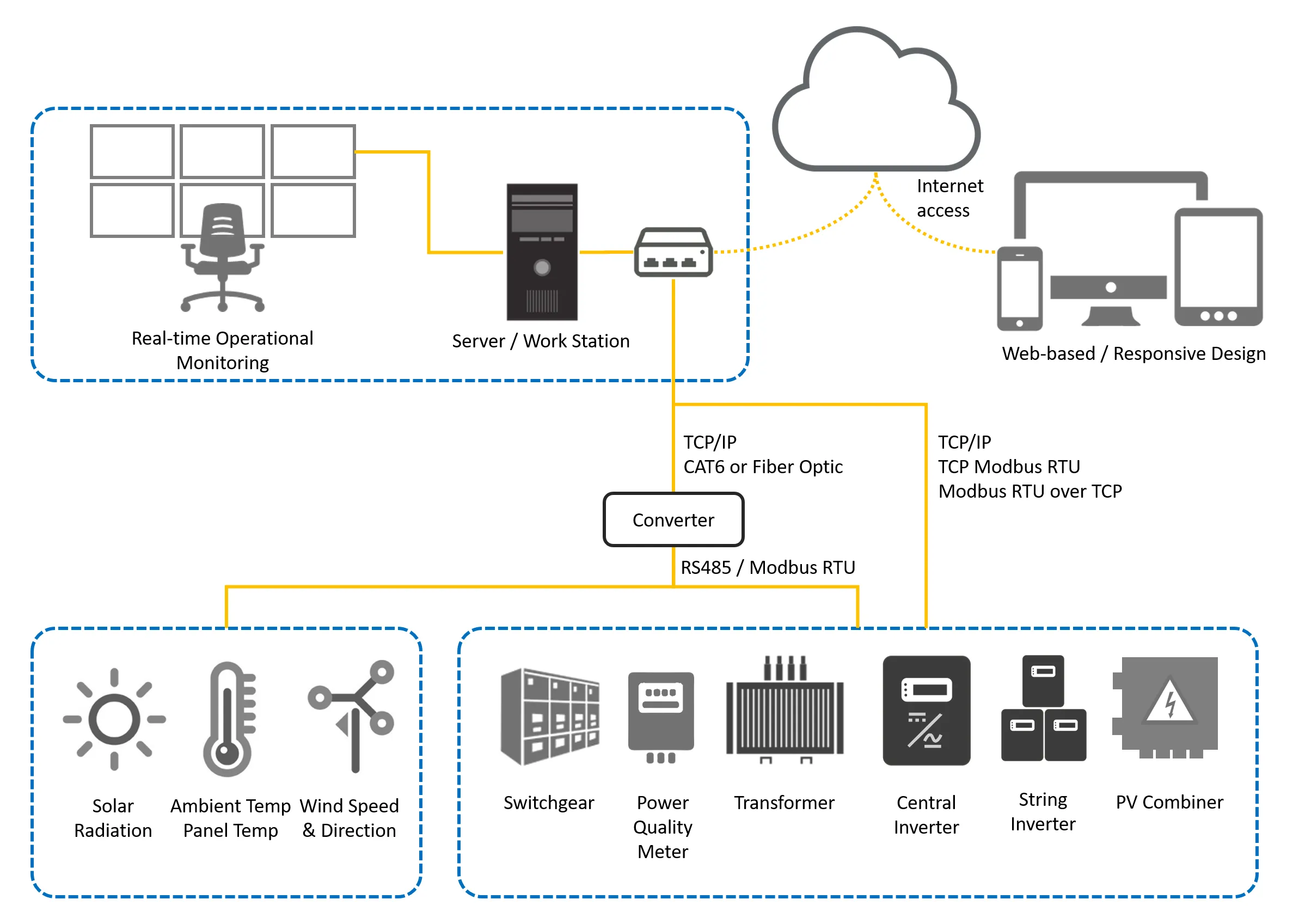
The monitoring system, a critical asset management component, integrates various elements to achieve this goal as shown in Figure 1.
- 24/7 monitoring and fault handling
- GPS tracking for precise location tracking of each asset.
- Condition monitoring closely monitors the health of renewable assets through temperature, vibration, and other relevant parameters.
- Protocols for activating Emergency Rescue Plans are established.
Data analysis
Data analysis aims to identify patterns, anomalies, and potential issues that could lead to downtime.
Analytics tools play a pivotal role in transforming raw data into actionable insights. They provide:
- A comprehensive view of wind and solar farms’ performance metrics.
- Offering a detailed analysis of power generation.
- Equipment health.
- Environmental factors that may impact efficiency and compliance.
- Detailed Reports and Health and Safety Considerations
Reporting
Reporting is a cornerstone of effective renewable asset management, providing stakeholders with vital insights into portfolio performance, financial health, and technical aspects.
- Portfolio Performance Reports offer a holistic view of energy production, downtime analysis, and efficiency metrics.
- Financial reports focus on the economic aspects of renewable assets. They encompass revenue generation, operational costs, return on investment (ROI), and cash flow.
- Technical reports cover operational details like equipment health, maintenance activities, and any deviations from optimal performance.
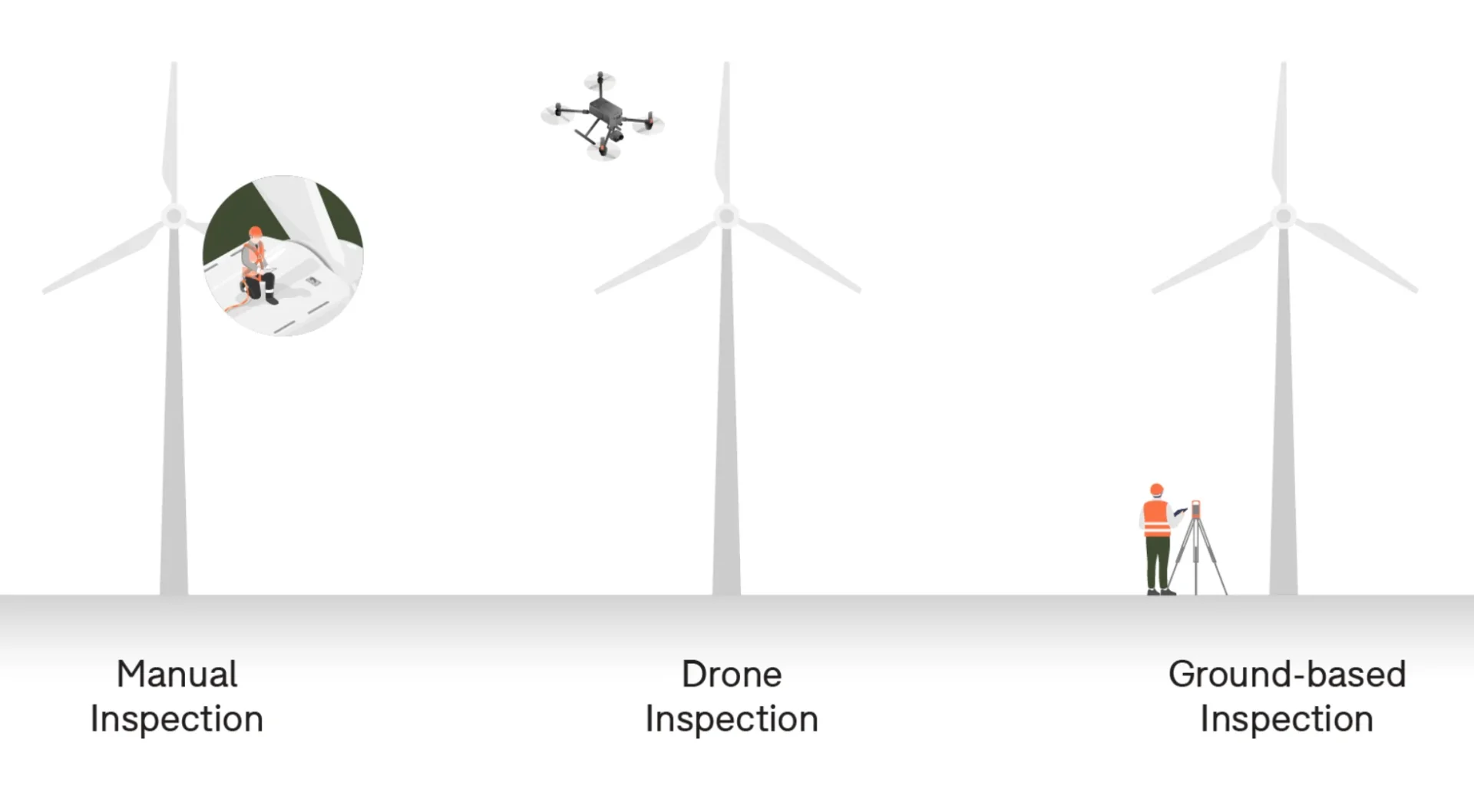
Site inspections
Site inspections play a pivotal role in maintaining the operational integrity of renewable energy assets. It requires:
- Maintenance checks
- Identifying HSE risks
- Reporting non-conformities
Regular site inspections ensure ongoing regulatory compliance, help operators comply with environmental standards, and (most importantly) assure safety.
Future outlook: technological innovations
Technological innovations can significantly improve asset performance. Implementing smart sensors and IoT (Internet of Things) devices helps monitor conditions in real-time.
Emerging technologies in the energy sector include:
- AI (Artificial Intelligence) for predictive maintenance
- Blockchain for secure energy trading
- Drones for routine inspections
Such innovations help monitor and manage assets more efficiently, reduce costs, and enhance energy production. Keeping up with the latest tech trends ensures that assets are not only maintained efficiently but also upgraded to meet future demands.
The importance of renewable energy asset management
In renewable energy, asset management encompasses various tasks. These include monitoring equipment health, performing preventive maintenance, and using data analysis to improve efficiency.
Effective management can reduce operational costs and extend the lifespan of energy assets, which is vital in a sector focused on long-term sustainability.