


Desertification occurs when land that was once arable and able to support life, biomass production, and vegetation is transformed into an environment resembling a desert.
Several factors, including deforestation, climate change, urbanisation, overgrazing, poor agricultural practices, water mismanagement, land mismanagement and poor policies can accelerate this process.
The effects of desertification include soil erosion, depletion of soil nutrients, reduction of water retention capacity, and disruption of ecosystem services. All of which leads to land degradation and, ultimately, desertification.
1. Deforestation
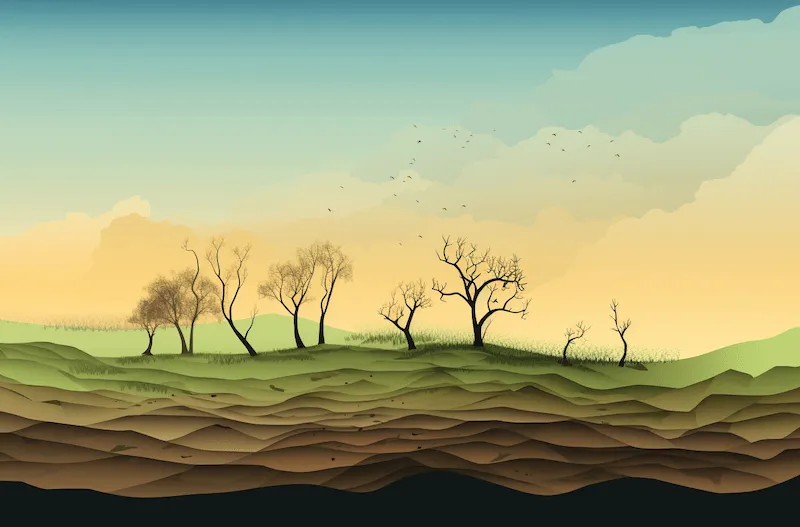
The unplanned and widespread removal of trees is called deforestation, which has several adverse effects on soil quality and the environment.
It decreases the fertility of soils, promotes soil erosion, and interferes with ecosystems. It also lowers the soil’s carbon content which strengthens and serves as a binding agent for soil particles like clay, silt, and sand.
Removing trees and other vegetation makes the ground more vulnerable to wind and water erosion, reducing the soil’s nutrients and water-holding capacity.
When massive contents of tree roots are excavated, the soil becomes unstable, which increases surface runoff and decreases the soil’s capacity to absorb water vertically, reducing soil fertility, and ultimately causing desertification.
2. Climate change
Climate change characterises the unpredictable state of weather patterns. Sometimes, increased rainfall results in heavy floods, while other times, months or even years pass without a single drop of rain.
Furthermore, warmer days occasionally occur in December during winter, while snowfall may unexpectedly happen in June, typically associated with summer.
Rising temperature levels also promote the decomposition of organic matter and the loss of carbon pools in the soil.
These fluctuations in precipitation patterns and abrupt temperature rises and falls disrupt the lives of various organisms and entire ecosystems.
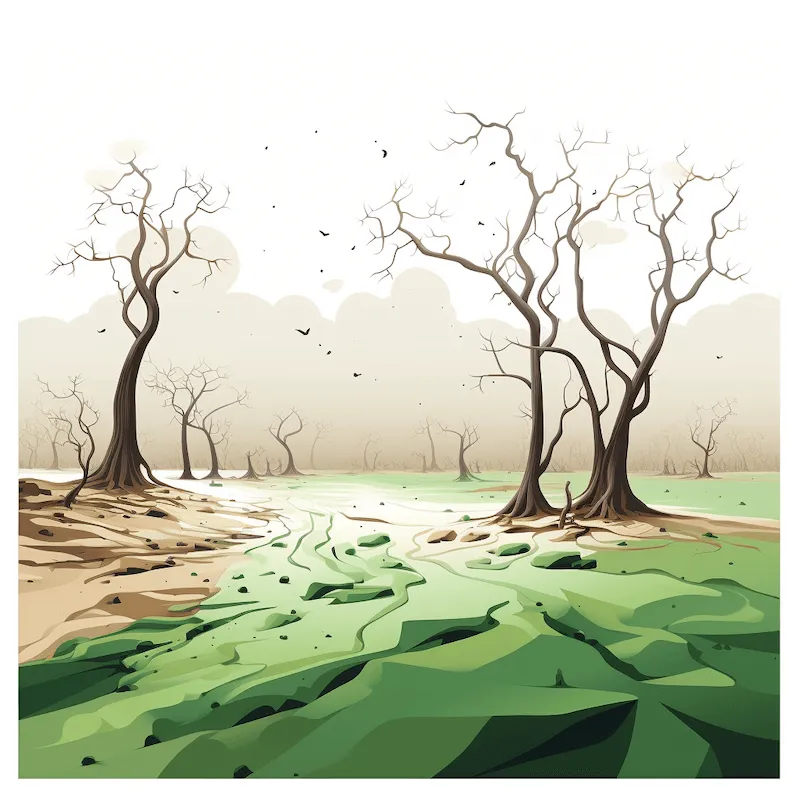
In the end, these alterations result in a decrease in vegetation cover and biomass on land. Heavy floods remove surface fertile soil, while in low and erratic rainfall, the soil moisture levels are decreased, and hot temperature enhances the evaporation losses of water.
Hot temperatures increase the losses of water in soil as well as in plants which is called evapotranspiration. Such alterations place immense stress on flora, making it more vulnerable to survival and hindering its regenerating ability.
Extreme weather events accelerate desertification, impacting the environment in profound ways.
3. Urbanisation and infrastructure development
Population growth has led to increasing demand for housing. As people move from rural to urban areas, the lush green fields in villages are transforming into deserts.
Natural landscapes face disruption due to urban expansion, resulting in compacted soil and reduced vegetation cover. Residential complexes and shopping malls are replacing agricultural land and green areas.
During the construction process, soil compaction occurs, diminishing its porosity and ability to retain water. This reduction in vegetation cover intensifies surface runoff and erosion, contributing to land degradation, ultimately resembling a desert landscape.
Highways and motorways are being constructed in place of forests and green land, often lacking adequate plant growth along their boundaries.
4. Overgrazing
Unplanned grazing enhancing desertification due to the removal of vegetation in rangelands which represent a significant portion of the entire land portion and serve as a crucial for carbon sequestration in the soil, have led to adverse consequences.
Extensive grazing practices have significantly diminished the biomass present on the ground surface. This has resulted in the loss of carbon content within the soil, thereby decreasing soil fertility and ultimately impacting the land productivity for various living organisms and biomass.
The reduction in vegetation cover exacerbates surface runoff and erosion, further deteriorating the land and causing it to resemble a desert.
5. Poor agricultural practices
Soil health undergoes significant impact due to various human-induced activities, including monoculture practices, extensive tillage without retaining crop residues and organic amendments, injudicious use of chemicals in agriculture, improper farm irrigation practices.
Monoculture depletes specific soil nutrients vital for crops, leading to soil degradation. Excessive application of chemicals affects soil organisms and biota.
Extensive tillage exposes the soil, promoting erosion, enhancing the decomposition of organic materials, weakening soil structure, disrupting its aggregation, and hastening desertification.
6. Soil erosion
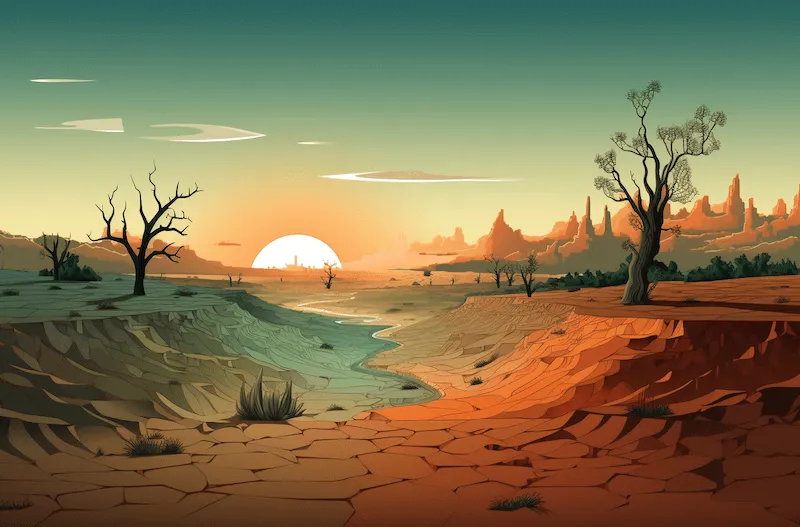
The removal of the surface fertile sheet of soil by wind and water is called soil erosion. In arid and semi-arid regions, the topsoil layer is continuously washing which is essential for plant growth and development.
Wind erosion can occur in dry, exposed places where loose soil particles are swept away. Water and wind erosion removes topsoil decreases its fertility and damages soil structure, reducing its capability to sustain vegetation and also promoting the process of desertification.
7. Water mismanagement
Inappropriate water use practices, such as excessive agricultural, industrial, and domestic extraction without sufficient replenishment, lead to water scarcity and desertification.
Misuse of water affects plant development and depresses soil moisture content in the field. Depleted and contaminated water sources cause ecosystems to become disturbed and exacerbate land degradation, which enhances the processes leading to desertification.
8. Mismanagement of land and unsustainable policies
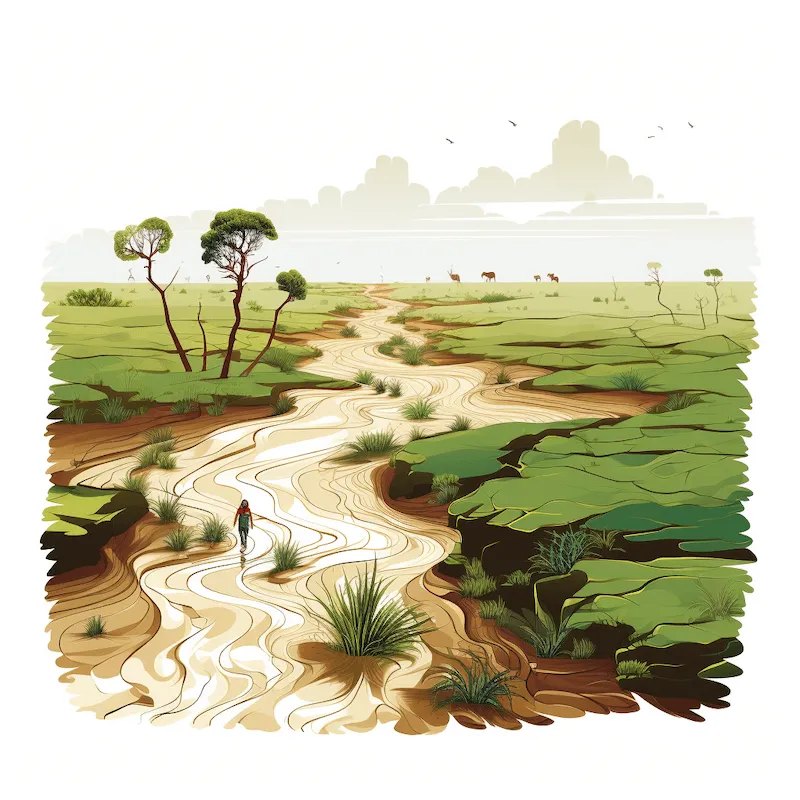
Unsuitable land management practices and unsustainable land-use policies both contribute to land deterioration.
If there are inappropriate regulations, weak enforcement, and unclear land uses, it might result in continuous land deterioration and worse desertification.
Effective policies and practices promoting sustainable land management are necessary to halt or reverse desertification trends.
Frequently asked questions
Fertile soil is defined as having all of the essential plant nutrients i.e. carbon (C), nitrogen (N), phosphorus (P), and potassium (K), present in it.
Soil productivity is the state in which all of the major plant nutrients, i.e. carbon (C), nitrogen (N), phosphorous (P), and potassium (K), are present in the soil and reachable to plants for growth and development.