


Understanding predator-prey dynamics
Predator-prey relationships create fascinating cycles in tropical forests. These interactions affect not just the animal species involved but ripple through the entire tropical ecosystem, shaping community structure and species diversity.
Modern simulation models have revealed that interference competition among predators, including jaguars, hawks and other superior competitors, generates significant indirect effects that maintain ecological interactions crucial for ecosystem services.
Fundamentals of predation in rainforests
The tropical rainforest food web is like a complex dance floor where predators and prey constantly adjust to each other’s moves. Predator and prey populations naturally cycle through time.
When predators are abundant, they reduce prey numbers. Then, with fewer prey available, predator populations decline, allowing prey to recover. These natural processes ensure efficient resource acquisition, supporting the coexistence of species in densely packed natural forests.

This balance is incredibly delicate. If one predator species disappears, herbivore numbers can explode. Too many leaf-eaters can strip vegetation bare, changing the forest structure and reducing biological diversity. Occasionally, subtle forms of commensalism and other biotic interactions emerge, benefiting one organism without affecting another.
Rainforests support multiple levels of trophic interactions.
- Top predators like jaguars shape the community structure by controlling herbivore populations.
- Smaller predators, like spiders or frogs, control insect numbers, protecting plants.
- Decomposers, parasites, and natural enemy species further illustrate the complexity of ecological interactions, which are fundamental to maintaining forest health.
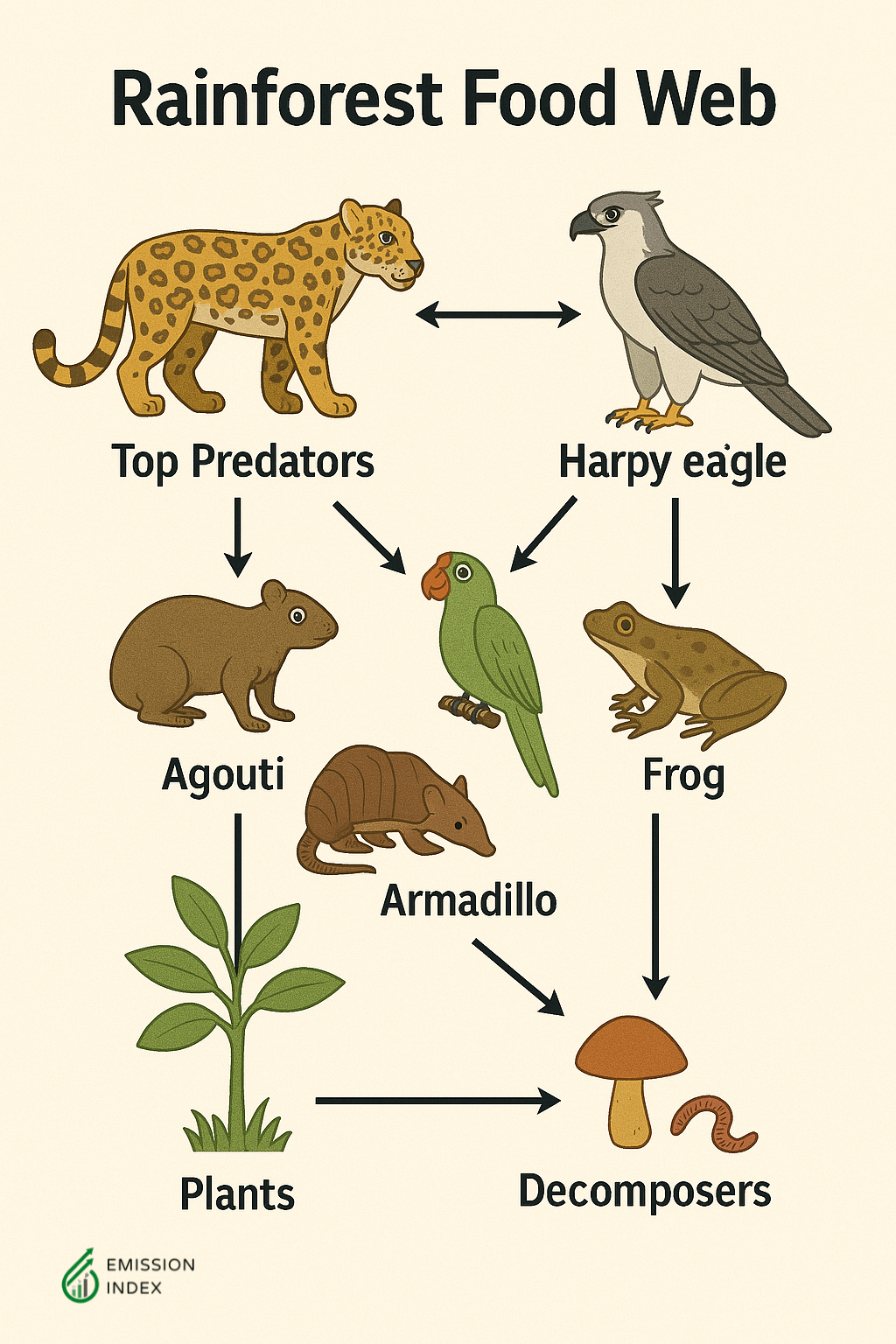
Key predator-prey interactions and examples
The harpy eagle, prominent in regions like Costa Rica, is a good example of rainforest predation. These massive birds hunt monkeys and sloths that feed on woody plants, fruits, and leaves. By controlling these populations, they protect plant diversity.
Big cats like jaguars and ocelots play similar roles by hunting various herbivores including:
- Agoutis (seed dispersers)
- Pacas (fruit consumers)
- Deer (browsers of young plants)
Even smaller predators matter enormously. Poison dart frogs control insects that would otherwise damage vegetation, and army ants sweep through the forest floor, controlling smaller invertebrates that could disrupt rainforest species.
Herbivory and plant defence mechanisms
Plants in tropical forests face constant pressure from herbivores. Without natural enemies controlling these animal species, plants would suffer greatly. To survive, plants develop remarkable defences:
- Chemical compounds (tannins, alkaloids)
- Physical barriers (thorns, tough leaves)
- Camouflage techniques
- Partnerships with protective insects

When predators keep herbivore populations balanced, plants can invest energy into growth rather than defence. This equilibrium supports a rich diversity of life.
Certain plants produce toxic compounds to deter herbivores, enhancing survival. Insects exhibit self-mimicry to evade predators, and plants rely on varied dispersal strategies to colonise gaps in the canopy. Leaf-cutter ants significantly contribute to nutrient cycling through their activities, indirectly influencing vegetation growth.
Effects of predation on plant populations
The absence of top predators triggers “trophic cascades,” profoundly affecting rainforest species and community structure. Removing a predator can drastically change forest composition.

Without predators, herbivores rapidly multiply and overgraze their preferred plants. This selective pressure means some plant species disappear, resulting in a loss of species, while dominant species thrive disproportionately.
Predation patterns influence nutrient cycling and vegetation growth. Predators maintaining herbivore populations ensure plant material remains to improve soil quality, supporting shallow root systems typical of rainforest trees. Research gaps remain concerning long-term effects of predation on vegetation patterns, particularly in disturbed habitats and degraded forests.
Influence on vegetation growth
Predator-prey relationships create complex interactions that dramatically shape vegetation growth. These interactions influence how plants evolve defensive mechanisms, affecting plant diversity and ecosystem stability.

Impact on ecological communities and ecosystems
Predator-prey dynamics shape entire communities through trophic interactions, affecting primary, secondary, and degraded forests. By regulating herbivore numbers, predators protect diverse vegetation, enhancing habitat quality for countless species.
For example, jaguars controlling monkey populations prevent excessive browsing of young leaves, ensuring healthier canopy development. On the rainforest floor, small predators prevent overconsumption of seedlings and saplings, helping establish future generations of trees.
These interactions significantly affect nutrient cycling. Predator kills provide decomposer nourishment, enriching soils that sustain shallow-rooted trees in old-growth forests and forest remnants.
Specialised predatory strategies and adaptations

Rainforest inhabitants display remarkable adaptations reflecting intense evolutionary arms races:
- Camouflage and mimicry: Tree boas blend seamlessly into branches, evading predation. Certain insects form mimicry complexes, reducing predation pressure, enhancing biodiversity.
- Adaptations for hunting and evading: Sloths move slowly to avoid detection, although species loss occurs if predation pressures become overwhelming.

Anteaters control ant populations, preventing excessive ant-driven protection of certain plant species, preserving ecological balance.
Conservation and human impact
Human activities significantly impact predator-prey dynamics, altering vegetation growth and community structure. Habitat destruction and habitat fragmentation have devastating effects, causing species loss and reducing biological diversity.

Key human impacts include:
- Habitat loss through deforestation
- Habitat fragmentation creating isolated forest patches
- Over-exploitation through hunting
- Introduction of invasive species
- Climate change altering natural cycles
Conservation of fragmented communities requires:
- Protected areas with buffer zones
- Wildlife corridors reducing forest distance between fragments
- Sustainable livelihoods for local communities
- Reforestation of disturbed habitats
- Monitoring predator-prey populations
Education initiatives raise awareness of the critical role predator-prey dynamics play in preserving rainforest biodiversity.
Understanding these complex ecological interactions encourages local support for conservation, ensuring the health of tropical forest remnants and sustaining ecosystem services.
Summing up
Predator-prey relationships are vital biotic interactions underpinning the health and stability of tropical ecosystems. Disruptions such as habitat destruction and disturbed habitats significantly impact these relationships, often leading to the loss of species, including dominant species crucial for maintaining community structure.
Healthy predator-prey dynamics support rich plant diversity and even aid recovery in secondary forests. Protecting these interactions is, therefore, essential for conserving biodiversity and sustaining the intricate web of life that allows rainforests to thrive.