


The green dilemma – the widespread adoption of renewable technologies faces roadblocks
The shift from traditional fossil fuel resources to renewable energy sources like wind, solar, hydropower and biomass energy has made remarkable strides in the past few decades. It shows promise in cutting carbon emissions and lowering our carbon footprint.
They can also insulate countries from volatile fossil fuel prices and reduce reliance on non-renewable sources. Despite these benefits, several disadvantages prevent many regions from fully transitioning away from traditional power stations.
Below is a concise look at the main issues, plus ideas on how to address them.
1. Economic challenges
High initial costs remain a hurdle for renewable energy projects, including solar installations and geothermal power plants, where setting up turbines or drilling wells is capital-intensive.
Ongoing maintenance requirements and operating costs can also influence the variability of energy bills. Meanwhile, fluctuating fossil fuel prices impact the competitiveness of green energy systems.
Ways to address this
- Stable funding models: Provide long-term subsidies or incentives to lower the initial investment of renewable energy technologies.
- Collaborative financing: Encourage community-driven investments and international partnerships to share risks and costs.
- Diversify energy sources: Balance multiple renewable sources (e.g., solar, biomass and wind energy) to spread out capital costs and reduce market volatility.
2. Technological and storage limitations
Many renewable energy facilities rely on weather-dependent sources of energy, like sunshine or strong winds, causing intermittent electricity generation.
Storing excess electricity during peak output remains expensive, and storage technology (e.g., batteries and pumped hydro storage) has limited renewable energy capacity. As a result, the current supply may not be sufficient to meet the growing global energy demand.
Renewable energy sources are deeply intertwined with the global response to climate change and are equally vulnerable to extreme weather events and changes in climate patterns. For example, droughts can affect hydroelectric power generation, while changing wind patterns can influence wind power’s energy efficiency.
Efficiency is another issue. For example, at their current stage, photovoltaic panels convert only a percentage of the available sunlight into electricity (around 15-20%).
Ways to address this
- Advanced storage solutions: Invest in R&D for battery innovation, pumped hydro, or hydrogen storage to handle energy at night and other low-generation periods.
- Smart grids: Upgrade renewable energy systems and electric power grids for real-time load balancing and better integration of renewable energy supplies.
- Hybrid approaches: Combine wind, solar, and hydroelectric power with nuclear energy or another steady type of energy to maintain energy supply when weather conditions are poor.
3. Geographic and natural limitations
Different forms of renewable energy depend on unpredictable weather patterns and natural resources such as sunlight, wind power, or the flow of water.
Bad weather conditions can reduce solar power output, while droughts undermine hydroelectric energy and tidal energy is only feasible in certain coastal areas.
Ways to address this
- Site-specific planning: Match each source of energy (e.g., geothermal energy for volcanic regions) to the area’s natural conditions.
- Enhanced transmission: Build robust infrastructure to transport renewable electricity from regions in surplus to those in deficit, boosting grid stability.
- Innovative technology: Explore large-scale renewable energy projects, such as floating solar farms or offshore wind plants, to make better use of available space

4. Environmental impact
While renewables are cleaner overall than non-renewable resources, large-scale solar, dams, or wind farms can still negatively impact the natural environment.
The production of sustainable sources like solar panels and wind turbines often relies on rare earth elements and metals and can require a lot of space. This land use can be at the expense of agricultural or forested land, potentially reducing habitats for wildlife and contributing to deforestation.
Habitat disruption is also an issue. Migratory birds may face increased risk from collisions with wind turbines’ rotating blades. Additionally, the construction of large dams for hydropower can alter the population dynamics of fish species.
Pollution and waste is another concern. Solar panel recycling, battery disposal, and biomass burning can all release harmful pollutants into the environment.
Ways to address this
- Responsible siting: Conduct thorough ecological assessments before developing new renewable energy installations.
- Recycling and reuse: Develop better processes for disposing of components like solar panels or wind blades.
- Sustainable sourcing: Use certified, responsibly sourced organic materials and prioritise minimal land conversion to safeguard wildlife and local ecosystems.

5. Social and political considerations
Concerns about political instability and local opposition can hinder renewable energy adoption.
Moreover, misinformation about renewable energy spreads doubts and slows projects’ progress, creating a barrier to public support.
Communities sometimes resist wind turbines or solar energy systems due to perceived eyesores, noise, or fear of property devaluation. Balancing energy independence with a fair distribution of costs and benefits is also a challenge.

Ways to address these
- Community engagement: Involve local stakeholders early, ensuring transparency about energy policies and potential cost savings.
- International collaboration: Work together on shared research, renewable energy investment, and stable policy frameworks to avoid abrupt changes that deter development.
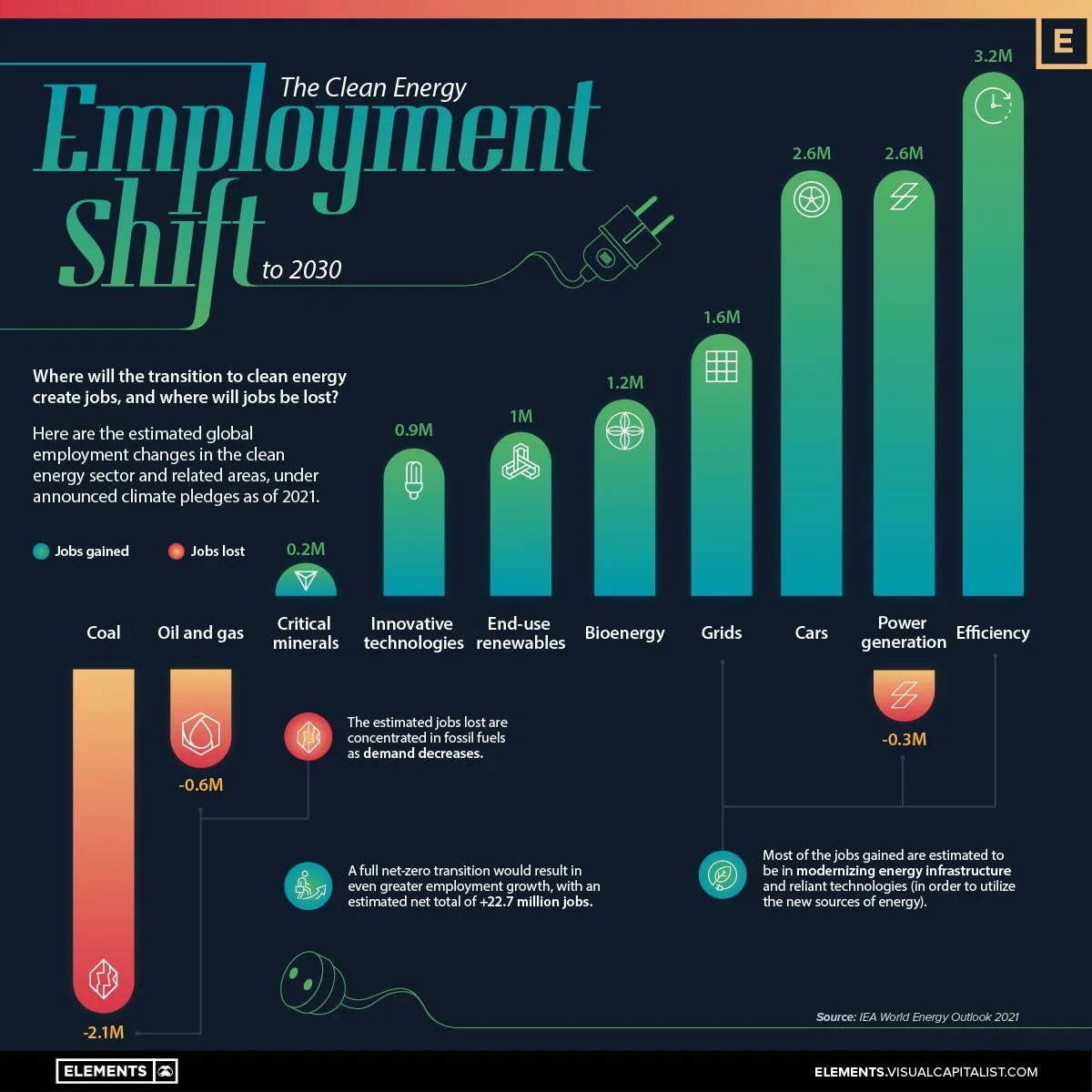
- Equitable job transitions: Encourage retraining programmes to help coal power station or fossil fuel resources workers move into the renewable energy sector.
- Moreover, emphasising the job creation potential of renewables might alleviate worries and facilitate a smoother transition. According to IEA analysis visualised by Visual Capitalist, the clean energy sector’s job growth may offset some losses in the fossil fuel industry
6. Geopolitical issues
The global power map is redrawn not with borders but with power flows. Renewable energy offers an olive branch for geopolitical stability but can also stir up existing tensions.
We could see increased resource competition; disputes may arise over the materials needed for clean energy technologies, shifting where geopolitical conflicts occur. These issues should not be taken lightly and could slow the energy transition.
Ways to address them
- Reducing dependencies: Adopting alternative energy sources can lessen reliance on countries with major fossil fuel reserves.
- Opportunities for cooperation: Over time, moving to renewables can reduce oil-related conflicts and foster global collaboration on climate change.
7. Regulatory and market issues
Mixed signals from the energy market (like fluctuating fossil fuel prices or inconsistent government incentives) create uncertainty.
Non-renewable energy resources remain entrenched, and competing interests may slow policy reforms that favour clean energy source development.
Ways to address this
- Clear, long-term targets: Guaranteed support for renewable energy technologies and structured plans to phase out high-emission traditional fuel sources.
- Market transparency: Provide reliable data on carbon dioxide outputs, greenhouse gas emission reduction, and energy generation performance to guide investors and consumers.
- Simplified regulations: Streamline permitting for renewable energy projects, reducing delays and financial barriers.

Yes, renewables are still the way forward, even with these challenges
Renewable sources can lower our overall carbon footprint, enhance energy independence, and protect against volatile fossil fuel prices. However, each advantage comes with corresponding challenges, including high upfront costs, technological limits, and environmental trade-offs.
By coordinating robust renewable energy systems with strong policy support, improved storage technology, and sustainable planning, we can mitigate these disadvantages and pave the way for a cleaner, more resilient future.