


Geothermal and solar power are two of the most competitive options in the ever-changing field of renewable energy.
This article aims to present a brief but thorough comparison of these energy sources, including information on their best applications, drawbacks, affordability, and suitability for individuals and enterprises.
Comparative analysis
Before we start, here’s a concise comparison between geothermal and solar energy.
| Criteria | Geothermal Energy | Solar Energy |
|---|---|---|
| Availability | Limited to specific geological locations near tectonic boundaries. | Virtually unlimited but dependent on sunlight conditions. |
| Installation Costs | High initial costs due to drilling and exploration. | Decreasing due to technological advancements. |
| Energy Reliability | Steady and continuous heat supply but geographically limited. | Intermittent; depends on daylight and weather, needing storage or backup systems. |
| Scalability | Suited for larger applications like district heating. | Highly scalable, from small residential systems to large solar farms. |
| Return on Investment | Potential for long-term savings, especially in heating. | Significant long-term savings possible, influenced by sunlight availability. |
| Environmental Impact | Low emissions; risks include seismic activity and fluid disposal. | No direct emissions; potential habitat disruption and biodiversity impact with large-scale farms. |
| Resource Management | Requires sustainable management to prevent reservoir depletion. | Needs sustainable mining and recycling of materials like silicon and rare metals. |
Let’s explore their strengths and weaknesses in more detail!
Overview of geothermal energy
Geothermal energy generates power by using the heat that exists inside the Earth. It entails drawing heat from the Earth’s natural reserves using steam, hot water, or drilling wells.
Overview of solar energy
In contrast, solar energy uses photovoltaic cells or solar panels to collect sunlight and turn it into electrical power.

It’s a popular renewable energy source, particularly for use in homes and businesses.
Best scenarios
When is geothermal the best option?
In areas with strong geothermal activity
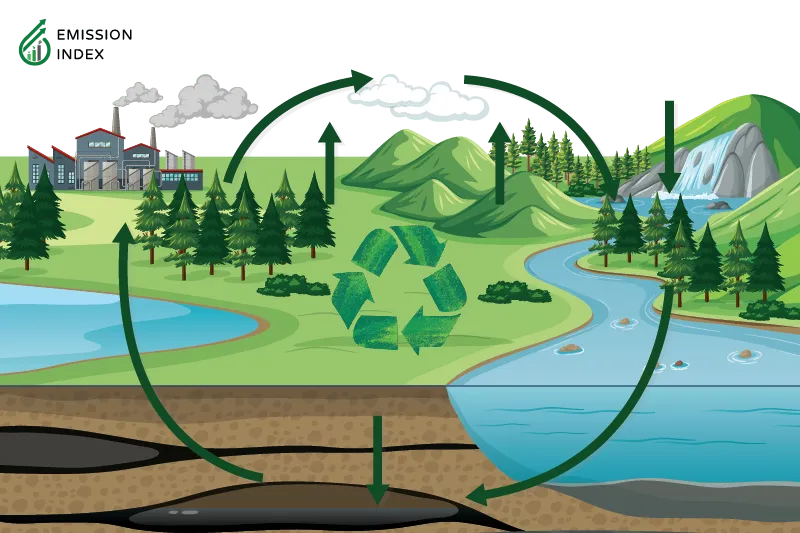
Geothermal energy shines in areas where the Earth is naturally very hot below the surface.
These areas often lie near the edges of tectonic plates – the giant slabs of Earth’s crust.
This proximity to plate boundaries means we can more easily tap into the heat from deep within the Earth.
These ‘hotspots’ are perfect for pulling out heat for different purposes, including running geothermal power stations.
Warming homes sustainably
Using geothermal energy to heat homes and buildings is a standout application.
Geothermal heat pumps use the Earth’s steady underground temperature to heat both houses and commercial buildings efficiently.
This method is eco-friendly and particularly effective in colder regions, providing a dependable heating solution.
Hot water supply
Geothermal energy is also great for consistently supplying hot water.
Whether it’s for homes, businesses, or industrial needs, geothermal systems can tap into the Earth’s heat to provide hot water.
This reduces the need for traditional water heating methods, making it a more sustainable choice.
Industrial processes
Geothermal energy is particularly useful for industries that need a lot of heat, such as manufacturing or food processing.
The constant and steady heat from beneath the Earth’s surface can help these industries operate more sustainably and profitably.
District heating
Geothermal energy is especially effective in district heating systems. These systems heat entire communities or areas from a single geothermal plant.
This approach is cost-effective and eco-friendly and plays a key role in sustainable urban development by providing reliable, consistent heat to many people at once.
When is solar the best option?

Sun-drenched areas
In areas that receive plenty of sunlight, solar energy flourishes.
The best places for solar installations are those that are nearer the equator or have consistently clear skies.
These sunny regions are great for solar power because the long hours of daylight mean more energy can be generated.
Residential rooftops
Installing solar panels on the roofs of houses is a key way to harness solar energy.
Using their roof space, homeowners can produce their own clean, renewable electricity.
Plus, any extra energy they generate can be sent back to the electricity grid, reducing their carbon footprint and helping the energy system.
Off-grid solutions
Solar energy is a real game-changer in remote or off-grid locations where traditional power infrastructure isn’t feasible.
In these places, solar panels and energy storage systems provide a reliable and sustainable source of electricity.
This improves access to power in these areas without the need for extensive power grid development.
Large-scale solar farms
Solar farms are a major way to harvest solar energy on a large scale. These farms consist of enormous arrays of solar panels.
When placed in areas with intense solar radiation, they can generate significant electricity for the grid.
Large solar installations like these can help meet the energy demands of entire regions.
Floating solar (generating energy on water)
Solar energy isn’t just limited to land – it can also be harnessed on water.
An innovative approach is floating solar installations, often set up on reservoirs or other bodies of water.
These systems produce electricity and help reduce water evaporation, showcasing the versatility of solar energy.
Limitations of geothermal and solar energy
Disadvantages of geothermal sources
Location dependence
The best places for geothermal energy are near tectonic plate borders.
Accessing viable geothermal reservoirs in areas lacking geological activity could be challenging.
Due to this restriction, geothermal energy cannot be widely used and may require the use of alternative energy sources in geologically inactive regions.
Resource depletion
Geothermal reservoirs can run out of resources or produce less heat when they are used extensively and for extended periods.
Achieving equilibrium between harnessing Earth’s heat for energy generation and letting reservoirs naturally replenish is essential.
It takes sustainable management techniques to prevent the overuse of geothermal resources.
Environmental impact
Seismic activity can be caused by geothermal energy extraction, especially in enhanced geothermal systems.
One major challenge is managing and mitigating induced seismicity.
Environmental issues are also raised by the disposal of fluids drawn from geothermal reservoirs.
It is imperative to handle and treat these fluids properly in order to mitigate any adverse ecological effects.
Disadvantages of solar power
Intermittency
Solar energy isn’t always consistent. It depends on the day-night cycle and the weather.
The production of electricity is halted by cloudy days and nights, so solar energy storage systems or other power sources must be integrated for a consistent and dependable energy supply.
Impact on land use
Building large solar farms requires a lot of space. This can affect natural habitats and reduce biodiversity.
It is difficult to strike a balance between reducing environmental impact and the need for renewable energy.
To address this issue, innovations such as dual-use solar-agriculture installations use land for both agriculture and energy production.
Resource intensity
Solar panels need materials like silicon, silver, and rare metals. These have to be mined and processed, which can harm the environment.
To make solar energy more sustainable, we need to manage the environmental impact of these processes.
Also, it’s important to develop good recycling methods for solar panels when they’re no longer usable.
Cost-effectiveness and return on investment (ROI)
Geothermal ROI
High setup costs but long-term gains
Drilling and reservoir development frequently need large upfront expenditures for geothermal power plants.
But once they’re up and running, they have cheaper running costs.
Geothermal systems have a long lifespan. Over time, this helps to provide a favourable return on investment (ROI), particularly in areas with an abundance of geothermal resources.
Consistent output enhances the economic viability
Geothermal power plants offer a dependable source of electricity because they produce energy with a steady and consistent output.
A positive economic outlook is influenced by this operational stability, especially when compared to some intermittent renewable energy sources like solar and wind.
Cost-efficient heating applications
Geothermal energy is superior for direct-use uses like heating, even outside the production of electricity.
Compared to conventional heating techniques, geothermal heating systems for homes and businesses can result in significant energy cost savings.
Long-term energy savings and decreased operating expenses offset the initial cost of installing geothermal heating systems.
Solar ROI
Falling panel costs drive down initial investments
The initial investment in solar energy has become more affordable due to the steady decrease in the cost of solar panels.
The financial viability of solar installations is increased by this cost reduction in conjunction with tax credits and government clean energy incentives.
Consequently, companies and homeowners can realise a faster return on their solar investment.
Energy saving costs over time
Solar investments eventually yield a positive ROI due to energy savings and the possibility of earning money from the sale of excess electricity.
Once installed, solar energy systems produce electricity at a meagre cost per kWh.
Refeeding excess energy production back into the grid offers financial rewards via feed-in tariffs or net metering.
Technological advances
Continuous technological advancements improve the overall performance of solar energy systems in solar technology.
These advances include more effective photovoltaic cells and creative panel designs.
Higher energy output from more efficient systems shortens the payback period and boosts the long-term economic viability of solar installations.
Cost suitability for businesses and consumers
Geothermal is a good fit for:
- Large businesses. Especially those requiring substantial energy, such as manufacturing, data centres, and greenhouse farming. Geothermal power plants offer economies of scale, making the initial investment worthwhile.
- Commercial district heating. It is effective for businesses and municipalities in colder regions for heating multiple buildings. Shared geothermal resources enhance cost-effectiveness.
- Homeowners. Suitable for those looking for a long-term investment in sustainable home heating and cooling. Despite higher initial costs, geothermal heat pumps offer long-term savings and energy efficiency.
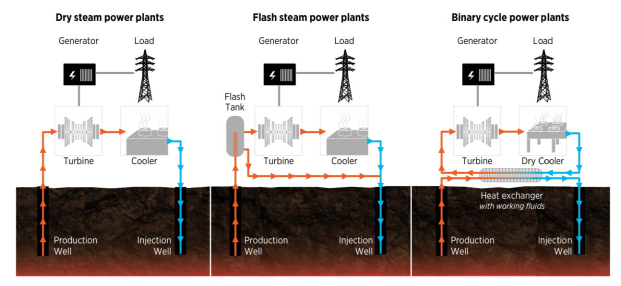
Cost Suitability for Businesses and Consumers in Solar Energy: Harnessing the Sun’s Economic Potential
Conversely, solar is an ideal fit for:
- Businesses with large rooftops. Installing solar panels can significantly reduce electricity costs and operating expenses. Suitable for businesses of various sizes due to scalability.
- Homeowners benefit from the decreasing costs of solar panels and various financial incentives. Residential solar installations cut down electricity bills and contribute excess energy back to the grid.
- Large-scale energy production: Perfect for businesses interested in investing in or operating large solar farms. These solar arrays can supply substantial amounts of energy to local and regional grids, aligning with renewable energy goals and providing a financially viable option for businesses.
There are three types of solar systems: On-Grid, Off-Grid and Hybrid. The latter two can be seen in this image.
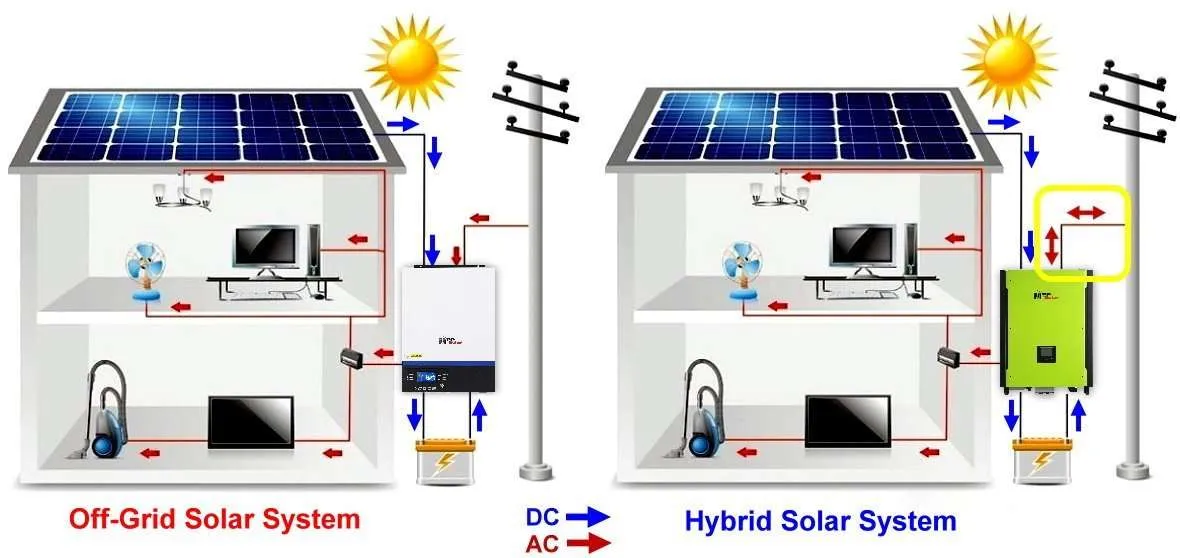
Learn more about grid-tied systems here.
Geothermal vs solar: which is the better energy source?
In the geothermal vs solar energy debate, there’s no one-size-fits-all answer.
The choice depends on various factors, including geographical location, application, and scalability.
Whether you’re a homeowner looking to harness renewable energy or a business aiming for sustainable practices, understanding the nuances of geothermal and solar energy is crucial for making an informed decision.